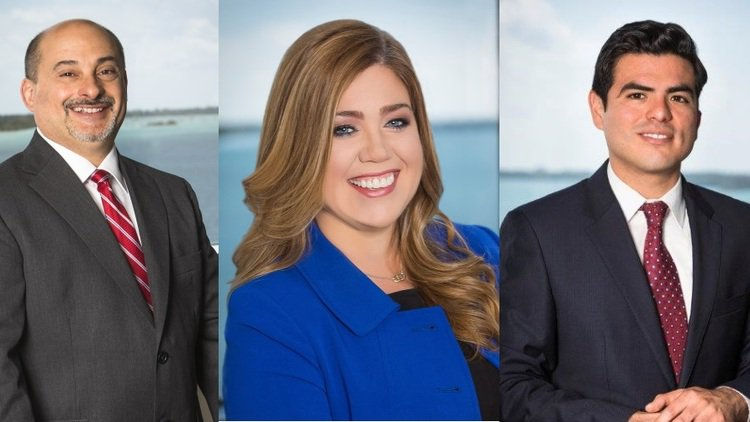
Attorney Spotlight – Get to Know Robert B. Kearney

3 de diciembre de 2024
3 minutes read

Sequor Law

1. What inspired you to pursue a law career? My dad was a small-town doctor. It was really important to him to help people in his community to—literally—get back on their feet. His role as a healer was more than a vocation to him; it was his identity and his calling. When I was in middle school, he was wrongfully forced out of the clinic he had helped build. The excuse the clinic provided was that he could no longer provide adequate care. Although the termination itself was certainly alarming, he was completely heartbroken by the insinuation that he ever provided anything other than the highest standard of care. That insinuation tarnished his very understanding of himself, I think. It truly changed him for a long time. Eventually, he filed a lawsuit against his former clinic and, when I was in college, he won, receiving some backpay for the wrongful termination. What mattered most to him, however, was that a jury of his peers had sat down and certified, after weeks of testimony, that his termination had nothing to do with his ability to heal. It really gave him back to us, in a lot of ways. I think that was the first time I really appreciated that the ability of the law to make someone whole is something more than an arithmetic exercise in compensation. Until then, I had primarily been looking at a career in consulting or finance, but that experience really drew me to the law.
2. Why did you choose the areas of law that you practice? It goes without saying that the ethos of this practice area is in line with what initially drew me to the law. Beyond that, however, I thrive on complexity. I truly enjoy unraveling and solving a difficult problem with a lot of variables, and I think that’s part of what drew me to insolvency and asset recovery. For example, I chose my bankruptcy clerkship over a district court offer because I had been tracking developments in the law and was fascinated by its breadth and the tools it offered.
3. What skills do you draw upon when it comes to your specific practice areas? Several past employers have commented on my ability to work through immense amounts of information relatively quickly and synthesize it into a story. I think that’s my primary skill and the one that I’ve found most useful here. It works for legal aspects of this practice area, as well as the complex factual situations we often encounter.
4. What is the most rewarding part about your job? So far, it’s the fact that I get to go to sleep every night knowing that I’m helping people be made whole. They say the arc of the universe bends towards justice; it’s nice to imagine I’m putting my own tiny amount of force into pushing that arc in the right direction.
5. Tell us about a mentor who made an impact on your career. I had several professors in law school that encouraged me to pursue what I was interested in, beyond the standard law school path. I also had two outstanding judges, Judge Erik Atas in the Maryland Circuit Court for Baltimore City and Judge James Tancredi in the U.S. Bankruptcy Court for the District of Connecticut, that pushed me to think creatively, learn to be better every day, and gave me incredible advice on so much more than my legal career. It feels like an injustice to name only one.
6. If you weren’t practicing law, what would you be doing? Probably working in consulting. That was my original path, but I’m not sure how much my heart was really in it. I prefer to imagine I’d be a history professor, but I don’t think I would have actually gone that route.
7. What might people be surprised to learn about you? I am a huge outdoorsman. I used to be a certified Wilderness First Responder and lifeguard, but I let those lapse a few years ago. It feels very surreal, I’m sure, to imagine anyone you have met in a suit standing up to their knees in a bog with a canoe on their back in the Canadian wilderness.
8. What is a good book or article you read recently? My favorite book I’ve read in the last few years is probably “The Last Stand of the Tin Can Soldiers” by James D. Hornfischer, which is a fantastic book for World War II history buffs. I’m currently reading “Chip War” by Chris Miller, which is a captivating narrative of the growth of semiconductors and their importance to geopolitics.